



|
|
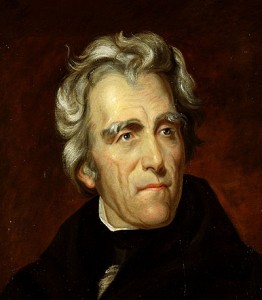
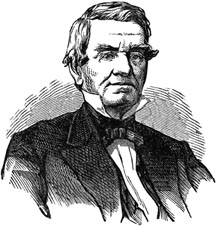
Manifest Destiny: Clash of Cultures Prior Knowledge: The discovery of gold in Georgia led to a tragic story in American history. As the number of settlers grew, there was a push to displace the Native people who lived there. In 1830 the Congress of the United States passed the "Indian Removal Act." This opened the door to removing the Cherokee people from the State of Georgia. Before any Native Americans were forced to move, Chief Justice John Marsall of the Supreme Court ruled that the land was sovereign. He said the Cherokees would have to agree to move by signing a treaty with the United States. There were supporters and opponents on both sides. Daniel Webster, Henry Clay and Davy Crockett supported the Cherokee along with John Ross, Cherokee Chief, who fought tirelessly for the Cherokee against the Georgia and federal governments. The number of Cherokees supporting a treaty was small compared to the 17,000 who made up the tribe. In this case the minority ruled and the Treaty of New Echota was signed by President Andrew Jackson March 1, 1836. The result of this act was the Trail of Tears where Native Americans were forced to walk from Georgia to Oklahoma under very harsh conditions. Over 4,000 lives were lost. This is only one example of the clash between cultures that began when
European settlers arrived in America. The idea of manifest destiny was
being used long before John O'Sullivan, an editor for the United States
Magazine and Democratic Review, coined the term in 1845.
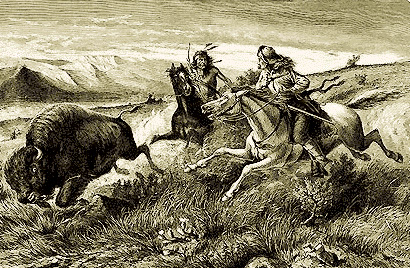
What is manifest destiny? What were some of the reasons that led to manifest destiny. What effect did it have on the people, the land, and the wildlife? Your history book is one source for information, but there are many documents, photographs, and other artifacts that were created at the time of an event. These primary resources also help to tell the story about history. Using the primary resources from the Library of Congress, your history book, and other sources, answer these questions and those on the next set of pages. The following pages are examples of lessons that would tie in to a larger unit. |
|
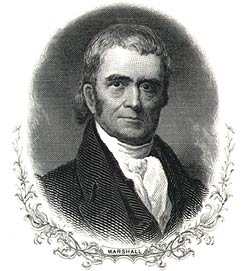
Chief Justice John Marshall
President Andrew Jackson
John Ross, Cherokee Chief 1828-1866 |
||||||||||||
|
||||||||||||||||


© 1996 - 2011 Linda C. Joseph
All Rights Reserved
All CyberBee Graphics are Trademarked
Graphics by
Darlene Vanasco/Creative Director
Erika Taguchi/Designer & Illustrator
Hosting Provided by Iwaynet